Two Bicycles
A Tale from Mpumalanga: The Two Bicycles of Sipho Dlamini. A parable of pride, patience, and the bridge between hearts.
Aaaah! Listen now, children. Come close. Come closer still. You there, stop poking your brother — you can do that tomorrow. Tonight, we tell a story. And this story, it is true. Or true enough, which in these matters is the same thing.
The storyteller says: Ngilandisa! — I am telling a story!
The people answer: Landelani! — We are listening!
In the village of Nkosi's Crossing, in the rolling red hills of Mpumalanga where the sun does not set so much as collapse with satisfaction into the earth — there lived a man called Sipho Dlamini.

Now. Sipho was short. But let us say it correctly. He was short in the way a well-made axe handle is short — precisely the right length for exactly the right purpose. His mother, old Nomsa, God keep her knees, used to say: "Sipho is not a small man. He is a man who fits." And she was not wrong. She was never wrong. She was a mother.
As a young man, like many young men before him and many after, Sipho heard the city calling. You know that call, ne? It speaks in the voice of money and shining things. So Sipho went to Johannesburg, the great golden beast of a city, and he went down — down, down, down into the dark belly of the earth to dig gold from the bones of our ancestors' land.
His short stature was no curse underground. In the narrow tunnels where a big man would become a stuck man, Sipho moved like water through reeds.
He worked. He saved. He did not drink his wages. He did not gamble them. He sent some home to Nomsa and he kept the rest, folded tight in a sock in a tin under his bed — the bank of the righteous poor.
And then one day, Sipho Dlamini came home.
✦ ✦ ✦
He came home with two bicycles. Not one. Two.
Eh! The village! You should have seen the village. Even the goats looked up. The bicycles were tall and proud and so shiny that Mama Dube's youngest — only four years old — walked directly into a fence post because he could not stop staring. He was fine. The fence post was fine. The bicycles were magnificent.
Now. When Nomsa and the village aunties saw those bicycles — ahhh, my friends, something happened in those old women. A fire was lit. A committee was formed without a single meeting being called. This is the power of aunties. They do not need an agenda. They are the agenda.
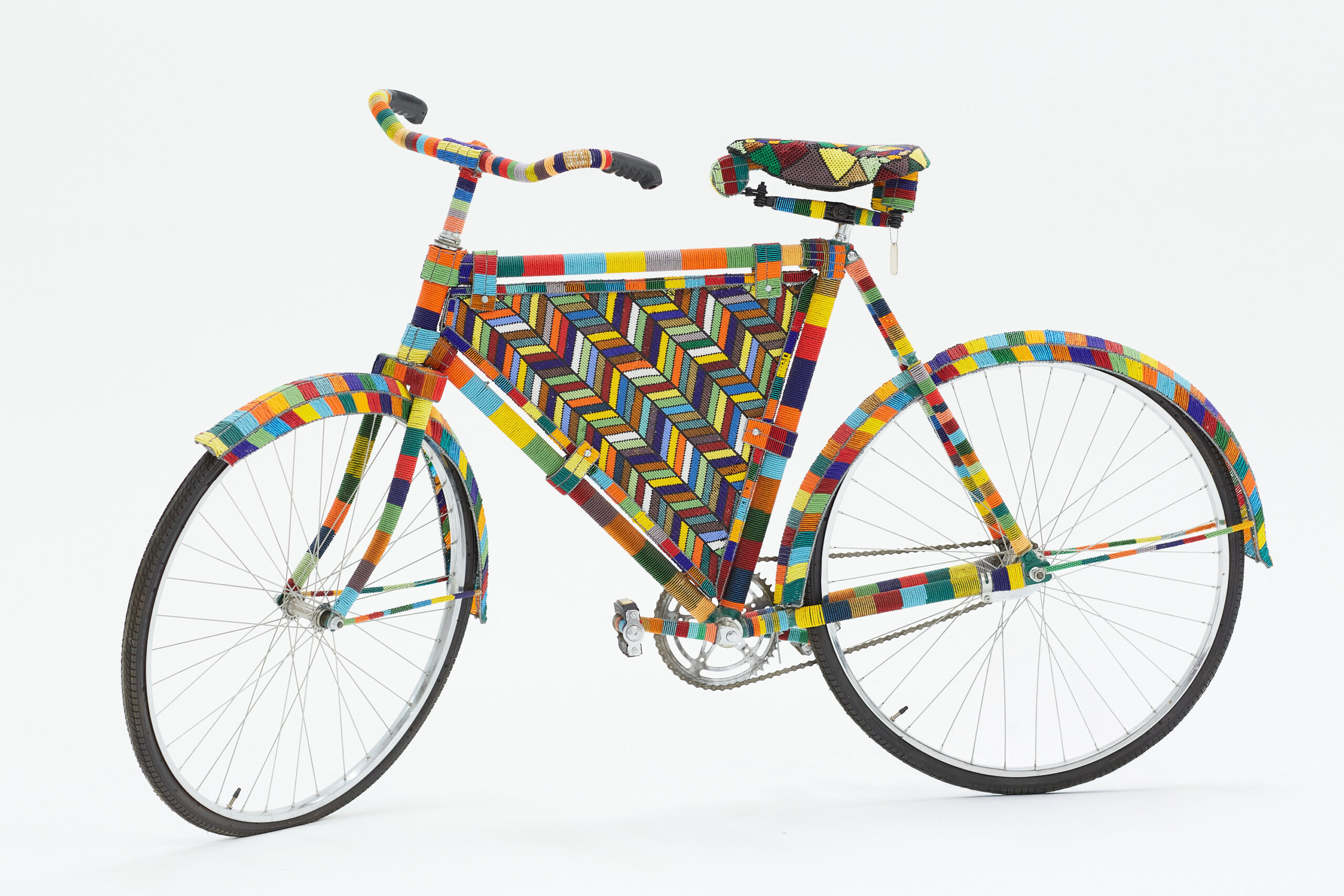
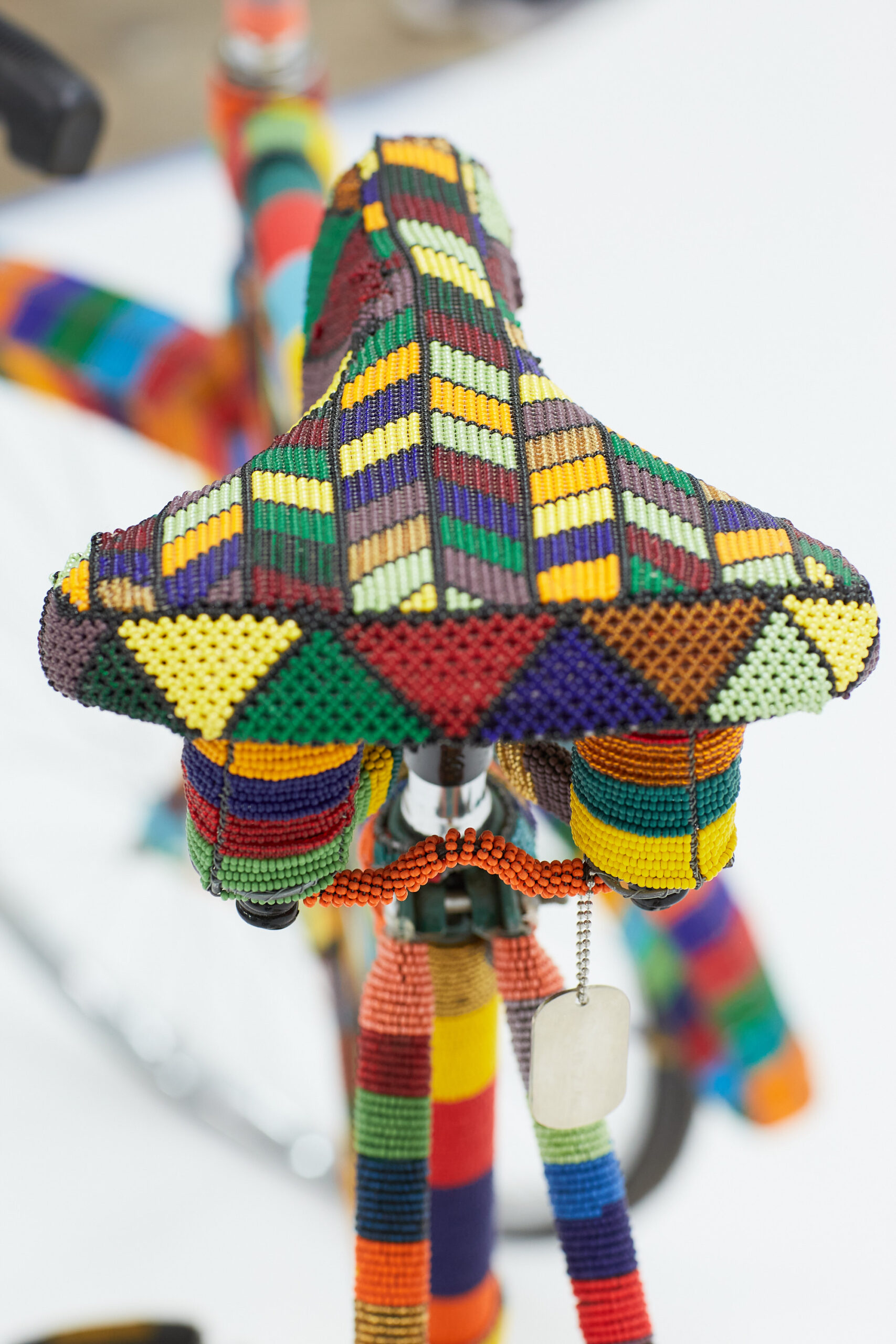
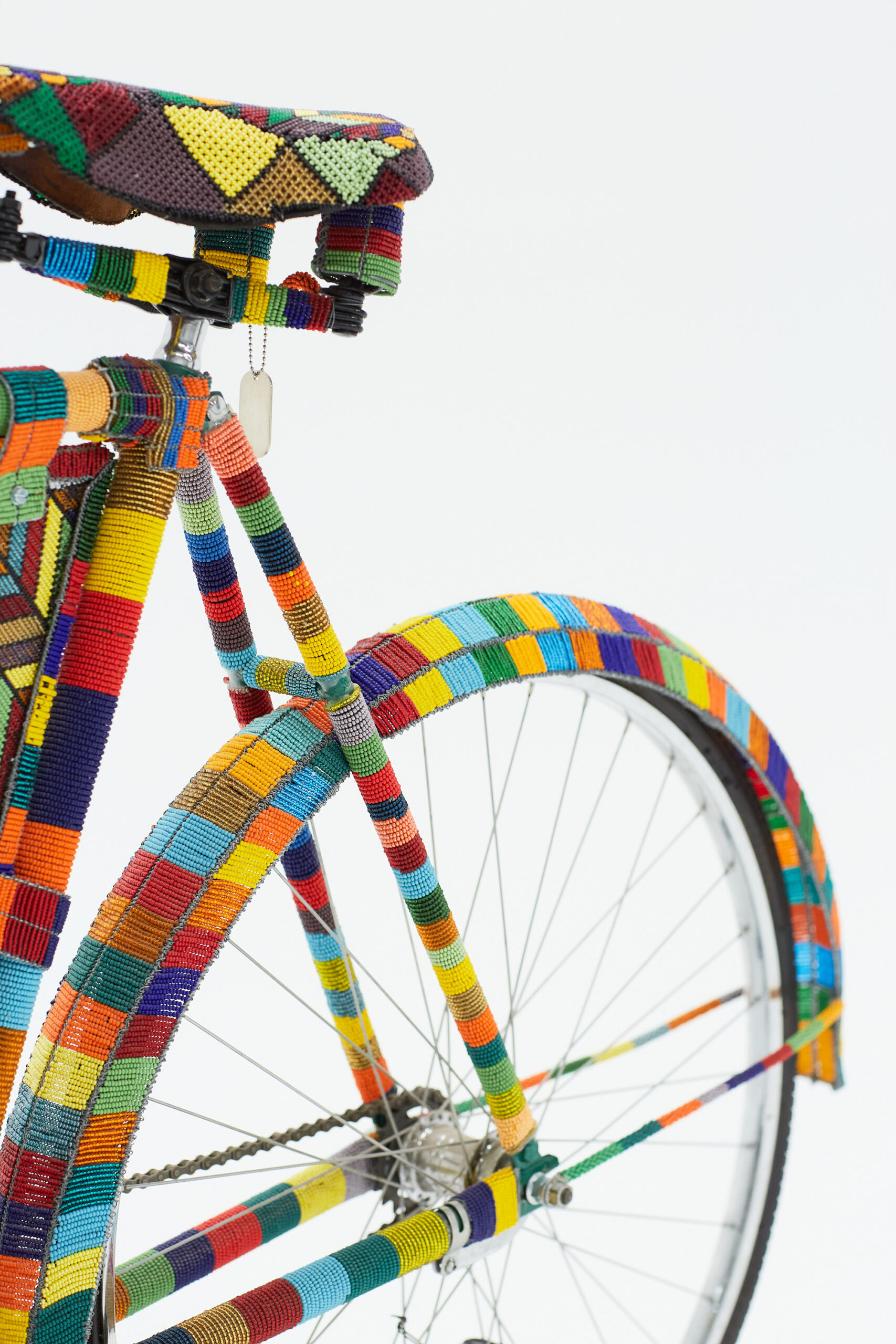
For three weeks — three full weeks — those women descended on those bicycles with beads. Tiny glass beads. Red beads, blue beads, the orange of the setting sun, the white of the first rains, the green of the marula trees. They stitched and they argued and they laughed so hard that Nomsa twice nearly fell off her stool, which is saying something because Nomsa was built like a comfortable hill.
They worked with the focused energy of women who have many opinions and have never once been ashamed of any of them.
When they were finished — eeeh! When they were finished, those bicycles were no longer bicycles. They were ancestors on wheels. They were the colors of Africa herself, gleaming under a sky so blue it seemed embarrassed to be so plain.
Mrs. Dube from house number fourteen came to look. She walked around them once. She walked around them twice. Then she wept into her good handkerchief — the one she kept for funerals and very important Sundays. She could not have told you why, and neither could I, but some beauty is like that. It bypasses the brain entirely and speaks straight to the chest.
✦ ✦ ✦
Now here is where the story gets interesting. Here is where you must pay attention, even you, boy, yes, you, put that stick down.
Sipho Dlamini, this small man with his big soul, had decided — quietly, the way small men sometimes dream enormous dreams — that he would marry Nomvula Khumalo.
Eh!
Nomvula Khumalo! As tall as the Matumi tree that roots itself in the banks of the Limpopo. As beautiful as the first light after the long rains. Every young man in Nkosi's Crossing had looked at Nomvula. Every young man had looked and then looked at his own feet and kept walking. Her father, Mr. Khumalo, was not a small man in any sense of the word — not in height, not in expectations, not in the depth of his frown when unsuitable men came sniffing around his homestead.
He looked at Sipho. He looked down at Sipho. Sipho looked back up at him, unbothered, the way a lion cub looks at a large piece of furniture.
"Lobola is not about buying a wife," Sipho said to the one friend who dared question him. "It is about respect. It is about unity. It is about weaving two families into one cloth. Only a fool sees cattle. The wise man sees the bridge."
And so on the agreed day, Sipho came to the Khumalo homestead. No cattle before him. No uncle speaking nervously on his behalf. Just Sipho, his face shining, his back straight, and two bicycles that moved through the afternoon light like royalty returning from a long journey.
Each one had a small silver bell on its handlebar. Ting. Ting.
Mr. Khumalo walked around them once. He said nothing.
He walked around them again. He still said nothing.
The four Khumalo brothers came out and walked around them too, because brothers must always have their opinion counted, even if nobody asked for it.
Then the oldest brother reached out — just one finger, just the thumb — and rang one bell.
Ting.
And the other bell answered, as if it had been waiting.
Ting.
Nomvula swept out of the house with the grace of a gentle giraffe, her arms moving at her sides like the long grasses blowing in a wind too gentle to feel — just swaying. Her neck, long and elegant, her head upright, from years of balancing a clay pot carrying water from the well.
She looked at her brothers, there they stood — all frozen like men who had looked directly into the sun and forgotten how to blink. Their mouths hanging open the way the old village gate hangs open — wide, unhinged, and no longer serving any purpose.
Nomvula spoke quietly, “Boys, close your mouths, anyone would think you are catching flies…”
She smiled the knowing smile of a woman who knows her own mind.
The brothers looked at each other. The father looked at his sons. There was a long silence of the very good kind.
"These," said the oldest brother, "are serious bicycles."
"Brought by a serious man," said the father.
Nomvula smiled. It was not a big smile, but the type of smile that lives in the corner of your mouth, as though a whole magnificent secret had pressed itself up against the edge of her mouth. The rest she held captive behind lips that had decided —like a queen deciding — how much of herself the world deserved to see today.
And it was done.
✦ ✦ ✦
They say, those who were there, that at the wedding Nomvula had to bend considerably to kiss her husband. And that Sipho had to rise on his toes to meet her. And that in this way — her coming down, him reaching up — they met each other somewhere in the middle.
As all people must.
On Sunday mornings, they rode together through the village — Nomvula folded gracefully over her handlebars like a long, elegant crane gliding over still water, and Sipho beside her, perfectly upright, looking precisely as though God had made him and the bicycle at the same time, for each other.
And the children of the village — ah, the children — they always ran after them. Laughing, stumbling, waving their arms.
And you know what it means, in such a place, when the children run after you?
It means everything has turned out exactly as it should.
Ngilandisile! — I have told my story!
The people answer: Siyabonga! — We give thanks!
The Moral of This Story
A man is not measured by the length of his shadow, but by the breadth of his thinking. Sipho did not offer the bicycles to buy a bride — he offered them to build a bridge. There is a great difference, and most people never learn it.
The proud man asks: "What can I display?"
The wise man asks: "What can I give?"
The truly great man asks: "What can we build — together?"
— "Umuntu ngumuntu ngabantu." A person is a person through other persons. | Nguni Bantu proverb